

Ethernet cables are an essential component of modern networking, allowing devices to connect to a Local Area Network (LAN) for high-speed internet access and data sharing. These cables are designed to facilitate smooth and uninterrupted communication between computers, routers, switches, and other networking devices.
1. What Are Ethernet Cables?
Ethernet cables are composed of twisted pair conductors, which help reduce electromagnetic interference and enhance signal integrity. These conductors can be made from pure copper or copper-clad aluminum (CCA).
Pure copper cables provide superior conductivity, minimal signal loss, and enhanced durability, making them the preferred choice for professional networking installations.
On the other hand, CCA cables are less efficient and may lead to connectivity issues over time.
Ethernet cables are categorized based on their data transmission capabilities. The most commonly used categories include:
Ethernet Cable Categories
- Cat5e (Category 5e) – An enhanced version of Cat5 that reduces interference and supports speeds up to 1 Gbps.
- Cat6 (Category 6) – Offers reduced crosstalk and improved performance, supporting speeds up to 10 Gbps over shorter distances.
- Cat6a (Augmented Category 6) – Designed for higher data rates and lower interference, suitable for 10 Gbps networking over longer distances.
- Cat7 (Category 7) – Features additional shielding to further minimize interference, making it ideal for demanding applications.
- Cat8 (Category 8) – The highest-performing Ethernet cable category, capable of supporting speeds up to 40 Gbps.

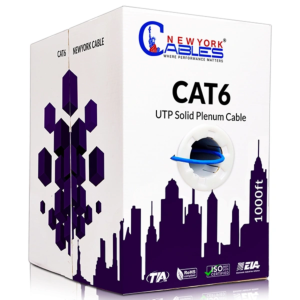
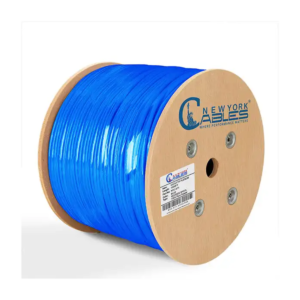
Ethernet cables are also classified based on their fire safety ratings and installation environments. The two main types include Plenum-rated (CMP) and Riser-rated (CMR) cables.
Ethernet Cable Jackets
- Plenum-rated Ethernet cables are designed for use in HVAC (heating, ventilation, and air conditioning) spaces where air circulation occurs. These cables feature a fire-resistant outer jacket that minimizes toxic smoke emissions in case of a fire. Due to strict building codes, CMP-rated cables are mandatory in plenum spaces.
- Riser-rated Ethernet cables are used in vertical shafts or between floors of a building. While not as fire-resistant as plenum cables, CMR-rated cables still provide significant flame-retardant properties to enhance network safety.
2. How to Identify Different Types of Ethernet Cables
Selecting the right Ethernet cable requires identifying its category, conductor type, and jacket rating. Fortunately, manufacturers label their cables with identifying marks on the outer jacket, making it easy to distinguish between different types.
- Plenum-rated Ethernet cables are marked with "CMP" on the jacket.
- Riser-rated Ethernet cables are labeled with "CMR" to indicate their suitability for vertical installations.
- Pure copper cables are often labeled as "100% Copper", ensuring they provide the best conductivity and longevity.
- Copper-clad aluminum (CCA) cables are marked as "CCA", indicating their lower conductivity and reliability.
It is crucial to use the correct cable for each installation environment. For example, using a riser-rated cable in a plenum space may save costs initially, but it can violate building codes and increase fire risks.
3. What Lengths Do Ethernet Cables Come In?
Ethernet cables are available in different lengths to accommodate various networking needs.
- Bulk Ethernet cables typically come in 1000-foot spools, allowing installers to cut custom lengths as needed for structured cabling projects. Bulk cables are ideal for large office buildings, data centers, and commercial installations.
- Patch cables, also known as pre-terminated cables, are available in shorter lengths ranging from 1 inch to 25 meters. These are commonly used to connect computers, routers, and other network devices in homes and offices.
For larger networking projects, it is recommended to purchase bulk Ethernet cables, as they offer greater flexibility and cost savings compared to pre-cut patch cables.
4. How to Label Ethernet Cables in a Network
Proper labeling of Ethernet cables is a crucial yet often overlooked aspect of network management. Labeling helps in troubleshooting, maintenance, and future upgrades, ensuring that network administrators can quickly identify and replace cables when necessary.
Here are some best practices for labeling Ethernet cables:
- Label Both Ends of the Cable – Always mark both sides of the Ethernet cable to indicate its source and destination. This prevents confusion when tracing connections.
- Use Clear and Consistent Markings – Instead of generic labels, specify which device or port the cable connects to. For example, "Router to Switch Port 5" is more informative than just "Ethernet 1."
- Utilize Durable Labeling Materials – Use heat shrink labels, wrap-around labels, or cable tags that are resistant to wear and tear. Avoid paper labels that may fade or peel over time.
- Maintain a Cable Management Log – Keeping a record of labeled cables in a spreadsheet or network diagram can help streamline future troubleshooting and maintenance efforts.
Well-organized and properly labeled network cables save time, reduce downtime, and improve efficiency in IT environments.
5. Where to Buy High-Quality Bulk Ethernet Cables?
When it comes to purchasing high-performance Ethernet cables, choosing a reliable supplier is essential. NewYork Cables is your one-stop destination for top-quality bulk Ethernet cables at market-competitive prices.
We offer a wide range of Ethernet cables, including:
- Cat5e, Cat6, and Cat6a cables in both Plenum (CMP) and Riser (CMR) variants.
- Pure copper and CCA options to meet different networking needs.
- UL and ETL-certified cables, ensuring compliance with industry safety and performance standards.
- Shielded and unshielded cables, catering to various networking environments.
Why Choose NewYork Cables?
- Premium Manufacturing Standards – Our cables undergo rigorous quality control to exceed industry specifications.
- Trusted by IT Professionals – Used by network administrators, installers, and businesses worldwide.
- Fast Shipping & Exceptional Customer Support – We ensure prompt delivery and outstanding service for all our customers.
Final Words
By understanding Ethernet cables and their specifications, you can make informed purchasing decisions, avoid costly mistakes, and maintain a high-performance, reliable network infrastructure.
Frequently Asked Questions
What is the difference between Cat5e, Cat6, and Cat6a cables?
Cat5e supports speeds up to 1 Gbps and is suitable for general networking. Cat6 offers better performance with up to 10 Gbps over shorter distances. Cat6a extends that 10 Gbps performance over longer distances and offers improved shielding to reduce interference.
Can I use a riser-rated cable in a plenum space?
No, using riser-rated (CMR) cables in plenum spaces is against building codes due to their lower fire resistance. For plenum spaces, always use plenum-rated (CMP) Ethernet cables for safety and compliance.
How can I tell if my Ethernet cable is pure copper or CCA?
Check the cable jacket for markings like "100% Copper" for pure copper or "CCA" for copper-clad aluminum. Additionally, pure copper cables are usually heavier and more expensive due to higher conductivity and durability.
Do longer Ethernet cables affect internet speed?
Yes, excessively long Ethernet cables (over 100 meters for Cat5e/Cat6) can lead to signal loss and reduced performance. Use the appropriate cable length and category to ensure optimal speed and reliability.
What type of Ethernet cable is best for gaming or streaming?
For high-performance tasks like gaming or HD streaming, Cat6 or Cat6a cables are recommended. These offer higher bandwidth and lower latency, providing a smoother and faster connection.
