-
June 04, 2025
Ethernet cables help connect your devices to the internet quickly and smoothly. They have come a long way since they were first made. Now there are many types for different uses. In this article, we will look at where ethernet cables came from, what they are, and what makes them work. We will also go over the main features, types, accessories, and certifications.
In addition, you will learn how to pick the right cable, how to install it, and how to fix problems if something goes wrong. Read on to find out everything you need to know about ethernet cables.
Historical Background
Ethernet Cables played an important role in the advancements of computer networking. Robert MetCafle introduced ethernet cables in 1973 with the help of his colleagues at Xerox PARC. They got inspiration from wireless communication ALOHAnet which was introduced at University of Hawaii.
Initially, ethernet cables contained thick coaxial conductors. People faced issues like interference, scalability, and troubleshooting. This resulted in bad network performance.
In the 1990s, coaxial cables were replaced with twisted pair cables. They offered good signal integrity, less interference, and reliable performance.
Ethernet cable was first used for telephone and modem lines, but now it serves as a cornerstone in digital infrastructure. It connects home networks to data networks with the lightning speed up to 40 Gbps over the Cat8 Cable.
What are Ethernet Cables?
February 19, 2025Imagine a world where downloading a movie took hours, and buffering was a constant frustration. Networking cables have transformed this reality, vital in connecting our digital world. Over time, these cables have evolved to meet increasing demands for speed, reliability, and efficiency. In 2025, the evolution of networking cables will be marked by groundbreaking advancements.
In this article, we discuss how networking cables have transformed and what innovations we can expect moving forward. Read on to find out.
-
 January 27, 2025
Setting up a clean and efficient network is essential for both homes and businesses. Bulk Ethernet cables, such as Cat5e, Cat6, and Cat6a, in plenum and riser iterations, are the backbone of any reliable network. Proper cable management not only improves the aesthetics of your setup but also ensures optimal performance and safety.
This comprehensive guide will help you understand every aspect of cable management and implement strategies to maintain a tidy, functional, and efficient network setup.
Must Read: Ultimate Guide to Cable Management
Key Takeaways
- Boost Efficiency: Proper Ethernet cable management (Cat5e, Cat6, Cat6a) improves reliability, reduces interference, and enhances performance.
- Choose the Right Cable: Cat5e for basic networks, Cat6 for medium setups, and Cat6a for high-performance or enterprise environments.
- Plan & Organize: Map your network, measure cables accurately, and ensure scalability to avoid future issues.
- Use Tools Effectively: Use cable managers, Velcro straps, and tools like crimpers and label makers for an organized setup.
- Maintain & Document: Regularly monitor, replace worn cables, and keep updated records for long-term efficiency.
Cable Management Matters!
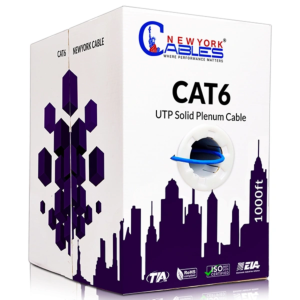
September 11, 2024When it comes to setting up a reliable and efficient network, choosing the right Ethernet cables is crucial. Among the various types available, Cat6 plenum cables stand out for their unique benefits and features. In this guide, we’ll explore what makes Cat6 plenum cables essential for your network, their benefits, installation tips, and where to find them at competitive prices.